The Sensory Blackout Happening Inside Your Sneakers — And Why Your Body Pays the Price

The Most Overlooked Sensory Organ You Walk On Every Day
Think about the last time you walked barefoot across grass or a cool hardwood floor. There's something almost startling about it — every texture, every temperature shift, every tiny slope registers instantly. That's not just a pleasant sensation. That's your nervous system doing something genuinely remarkable.
Your feet contain roughly 200,000 nerve endings per sole. They're constantly transmitting positional data, pressure maps, and terrain feedback up through your spinal cord and into your brain. Scientists call this proprioception — your body's internal GPS. And right now, most Americans are walking around with that GPS quietly switched off, buried under inches of foam, arch support, and cushioning technology that was designed to protect you but may, in certain ways, be working against you.
This isn't an argument for throwing your Hokas in the trash. It's a conversation worth having, because the research on footwear and neurological feedback is more nuanced — and more interesting — than the sneaker industry typically lets on.
What Proprioception Actually Does for You
Proprioception isn't just about knowing where your foot is in space. It's a real-time communication loop between your feet, your joints, your vestibular system, and your brain. When you step on an uneven surface, your foot sends an alert. Your ankle adjusts. Your hip stabilizers fire. Your gaze steadies. All of that happens before you're consciously aware of it.
When that feedback loop is sharp, you move efficiently, react quickly, and are far less likely to roll an ankle or take a bad fall. When it's dulled — by thick cushioning, rigid soles, or poorly fitted orthotics — your body loses a fraction of that reactive precision. Over time, that fraction adds up.
Research published in journals like Gait & Posture and Footwear Science has consistently shown that highly cushioned footwear reduces plantar sensory input. In plain English: the more padding between you and the ground, the less your foot can actually feel — and the less information your nervous system has to work with.
The Cushioning Paradox
Here's where things get counterintuitive. Cushioned running shoes were originally marketed as injury prevention tools. More padding, the logic went, means less impact, which means fewer injuries. But the data has never fully supported that conclusion.
A landmark study out of Harvard found that barefoot runners and minimally shod runners tend to land with lower impact forces than those in heavily cushioned shoes. Why? Because when your foot can feel the ground, it self-regulates. You naturally adjust your stride to reduce impact. When the cushion removes that sensory consequence, your brain stops moderating the landing.
This doesn't mean cushioned shoes cause injuries across the board — the relationship is far more individual than that. But it does mean the cushioning you think is protecting your knees and hips might be doing so at the cost of the neural feedback that keeps your movement patterns honest.
Orthotics add another layer to this conversation. Custom orthotics serve a real clinical purpose for people with specific biomechanical issues, and no one should ditch medically prescribed support without talking to their provider first. But there's growing concern among sports podiatrists that long-term reliance on arch support can gradually weaken the intrinsic foot muscles — the small but mighty muscles that help your arch function dynamically rather than statically. If the orthotic is always doing the job, those muscles don't need to show up for work.
What Minimal Footwear Research Is Actually Saying
The minimalist shoe movement peaked around 2010, fueled largely by Christopher McDougall's book Born to Run and a wave of enthusiasm for Vibram FiveFingers. Then came the injury reports — Achilles ruptures, stress fractures, plantar fascia strains — and the pendulum swung back hard.
But researchers didn't abandon the question. What emerged from the aftermath is a more measured understanding: minimal footwear can improve proprioception, strengthen foot musculature, and enhance movement efficiency — but only when the transition is gradual and intelligent.
A 2019 study in the Journal of Science and Medicine in Sport found that participants who progressively transitioned to minimal footwear over 26 weeks showed significant increases in foot muscle size and strength, without elevated injury rates. The key word is progressive. Going from a maximally cushioned trainer to a zero-drop minimalist shoe in a week is a recipe for a stress fracture. Doing it over months is a legitimate training strategy.
Grounding practices — walking barefoot on natural surfaces — have also attracted scientific attention, with some research suggesting that direct contact with the earth may influence inflammation markers and autonomic nervous system activity. The evidence here is still early, but it aligns with what we know about sensory stimulation and systemic regulation.
Practical Ways to Retrain Your Foot Sensitivity
You don't have to go full barefoot purist to reclaim some of what modern footwear has muted. Here are practical starting points that work for most active adults:
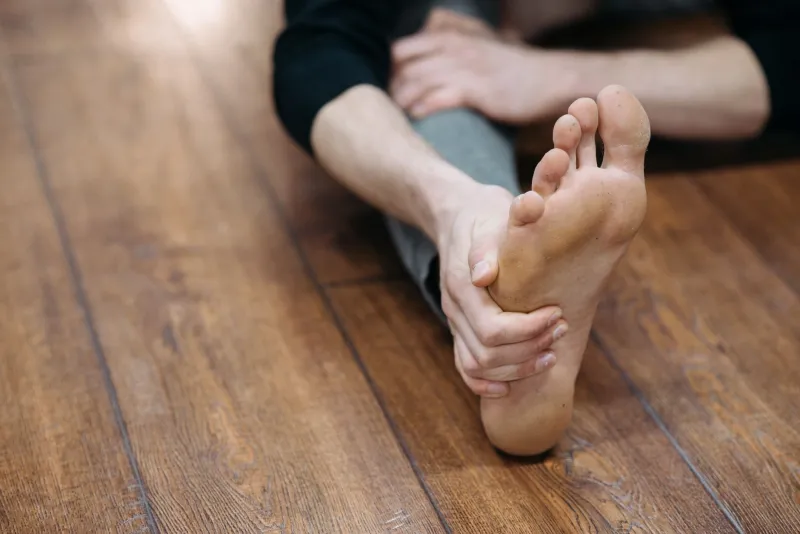
Start indoors, on safe surfaces. Walk barefoot around your home for 20–30 minutes a day. This alone begins to wake up the sensory receptors in your soles without any impact risk. Hardwood, tile, and carpet all offer different textures — and your nervous system benefits from that variety.
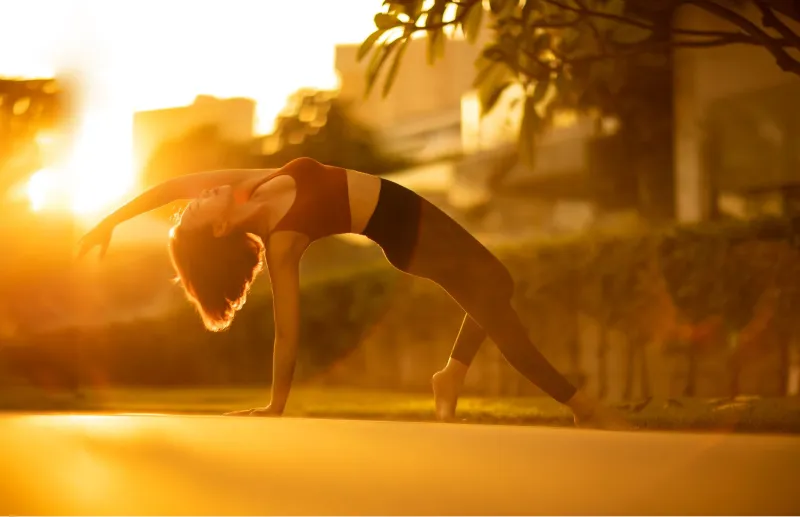
Try barefoot training for low-impact work. Yoga, mobility work, and bodyweight strength training are ideal contexts for going shoe-free. These activities don't involve high-impact loading, so the injury risk is minimal while the proprioceptive benefit is real.
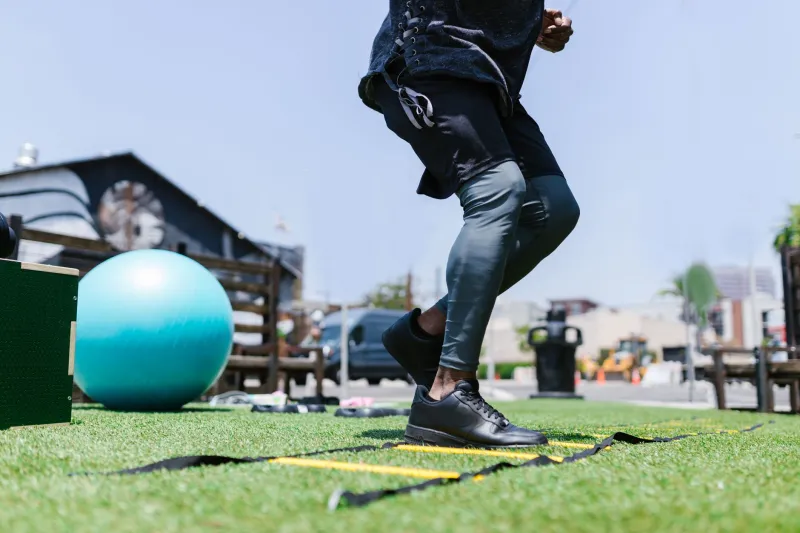
Experiment with a lower-drop shoe for casual wear. You don't need to go zero-drop immediately. Moving from a 12mm heel-to-toe drop to an 8mm or 6mm shoe is a meaningful step down that your body can adapt to without drama.
Add single-leg balance work to your routine. Standing on one foot — especially on an unstable surface like a foam pad or balance board — forces your foot's sensory system to engage actively. Even 2–3 minutes daily creates measurable improvements in proprioceptive acuity over time.
Toe spreading exercises. This sounds almost comically simple, but actively spreading and lifting your toes strengthens the intrinsic foot muscles that cushioned shoes tend to leave dormant. Try it right now — chances are it's harder than you expect.
Walk on varied outdoor terrain when you can. Grass, gravel, sand, and packed dirt all provide richer sensory input than pavement. Even a short barefoot or minimal-shoe walk on natural surfaces a few times a week can meaningfully enhance foot sensitivity.
Finding the Balance That Works for You
The goal here isn't ideological purity about footwear. It's about making conscious, informed choices rather than defaulting entirely to whatever the shoe industry has optimized for comfort and cushioning.
If you have plantar fasciitis, a structural deformity, or a history of stress fractures, please work with a sports medicine physician or physical therapist before making any footwear changes. For most otherwise healthy, active people, though, the conversation is worth opening.
Your feet were designed to be highly intelligent contact points — gathering data, communicating with your nervous system, and helping your entire body move with precision. Modern life has wrapped them in foam and rubber and asked them to stay quiet. Gradually giving them back their voice is one of the simpler, lower-cost interventions you can make for your long-term movement health.
Move better. That starts from the ground up.