The Ground Beneath Your Gains: How Foot Strength Is Quietly Sabotaging Your Performance
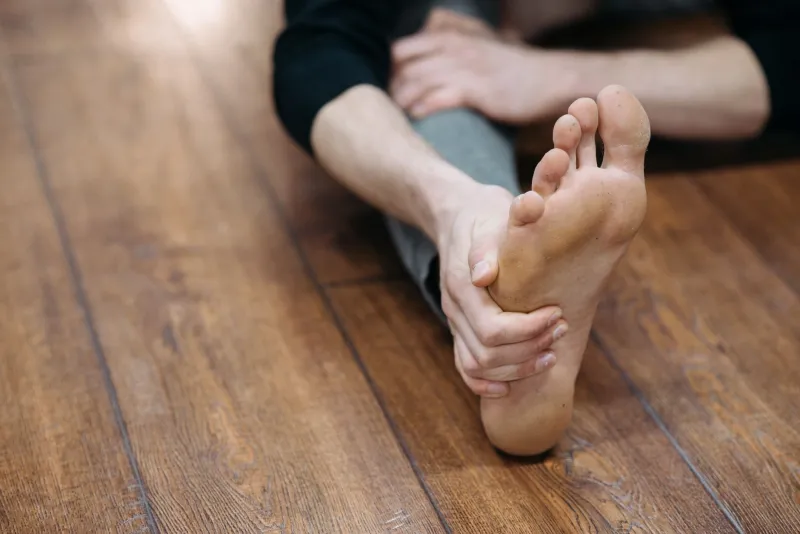
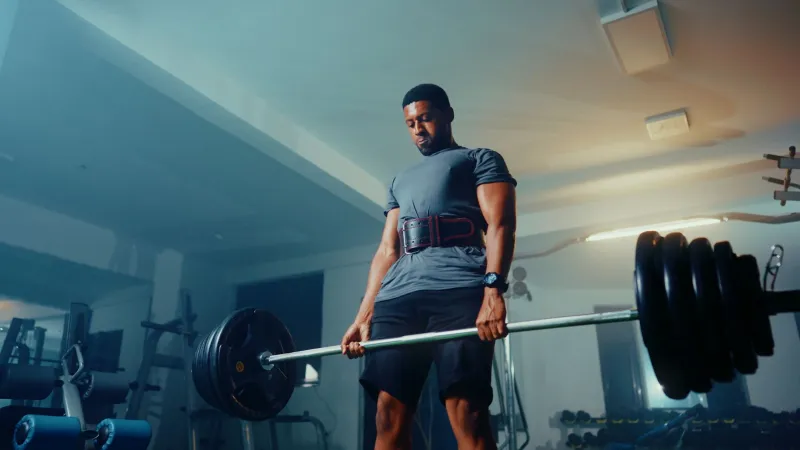
Let's talk about something most gym-goers completely ignore until something goes wrong. Not your glutes. Not your lats. Not even your deep core. We're talking about your feet — specifically the roughly 100 muscles, tendons, and ligaments packed into each one, all of which are working (or not working) every single time you step under a barbell, push off a starting block, or hit a trail run.
Here's the uncomfortable truth: most of us have feet that are undertrained, undersupported, and wildly underappreciated. And that neglect has a way of quietly bleeding upward into your knees, hips, lower back, and beyond.
Why Feet Are the Original Foundation
Your foot contains 26 bones, 33 joints, and over 100 muscles and connective tissue structures. It's an engineering marvel designed to absorb force, adapt to terrain, and transmit power from the ground up through your entire kinetic chain. When that system is compromised — whether from years in cushioned shoes, sedentary habits, or just plain neglect — everything above it compensates.
Think about a squat. The moment you unrack the bar, your feet are responsible for detecting ground contact, distributing load evenly, and anchoring the movement. If your plantar fascia is tight, your arch collapses, or your intrinsic foot muscles are essentially asleep, your ankles compensate by limiting dorsiflexion. That restriction then pushes stress into your knees and hips, and suddenly you're wondering why your squat feels off no matter how much you stretch your hip flexors.
Spoiler: it's not your hip flexors.
Proprioception — Your Foot's Secret Superpower
Beyond raw strength, your feet are one of the richest sources of proprioceptive feedback in your entire body. Proprioception is your nervous system's ability to sense where your body is in space — and your feet are packed with mechanoreceptors that constantly feed that information upward.
When those receptors are dulled — which happens when you spend eight-plus hours a day in thick-soled shoes that do all the sensory work for you — your balance, coordination, and movement efficiency all take a hit. Research published in the Journal of Electromyography and Kinesiology has shown that reduced foot proprioception is linked to altered knee and hip mechanics during dynamic movements, meaning your form breaks down in ways you can't necessarily see or feel until something hurts.
For athletes, this matters enormously. Better foot proprioception translates to faster reactive balance, cleaner landing mechanics, and more fluid changes of direction. For lifters, it means a more stable base under load, which is exactly what you want when things get heavy.
What Happens When the Foundation Cracks
Plantar fasciitis is probably the most well-known foot issue in fitness circles, but it's really just the loudest symptom of a broader problem. Overpronation, flat arches, and poor toe splay are all signs that the intrinsic muscles of the foot — the small but critical muscles that live inside the foot itself, not the extrinsic muscles of the calf — aren't pulling their weight.
When those intrinsic muscles are weak, the plantar fascia (the thick band of connective tissue running along the bottom of your foot) takes on more load than it was designed to handle. Over time, that leads to microtears, inflammation, and the kind of heel pain that makes getting out of bed in the morning feel like a punishment.
But plantar fasciitis isn't the only consequence. Weak feet are also associated with shin splints, Achilles tendinopathy, patellar tendon issues, and even lower back pain. The body is a connected system, and a shaky foundation sends ripples all the way up.
Training Your Feet: What Actually Works
The good news? Your feet respond to training just like any other body part. Here are evidence-backed approaches that genuinely move the needle.
Short Foot Exercise
This is the gold standard for intrinsic foot muscle activation, and it's exactly as unglamorous as it sounds. While seated or standing, try to shorten your foot by drawing the ball of your foot toward your heel without curling your toes. You're essentially trying to create an arch using only the small muscles inside your foot. Hold for 5–10 seconds, repeat 10–15 times per foot. Research from the Foot & Ankle International journal has shown this exercise significantly increases intrinsic foot muscle cross-sectional area over time — meaning it actually builds muscle, not just awareness.
Toe Spread and Control
Most people can't independently control their toes at all, which is a sign of how disconnected we've become from our feet. Practice spreading all five toes wide, then trying to lift just your big toe while keeping the others down, and vice versa. It sounds simple. It isn't. But with consistency, this kind of neuromuscular re-education wakes up motor pathways that have been dormant for years.
Single-Leg Balance Progressions
Standing on one leg on a firm surface is basic. Add a slightly unstable surface (a folded yoga mat, a BOSU ball, or even a rolled towel), close your eyes, or add an upper-body movement, and you're forcing your foot's proprioceptive system to work overtime. Aim for 3–4 sets of 30–60 seconds per side, a few times a week.
Calf Raises With Intent
You've probably done a thousand calf raises. But are you doing them barefoot, with full toe engagement, and controlled tempo? Elevating your heels off a step and lowering slowly through your full range of motion — while actively gripping the surface with your toes — turns a basic exercise into serious foot and ankle conditioning.
Barefoot Training Time
This doesn't mean ditching your shoes entirely or going full minimalist overnight. But adding 20–30 minutes of barefoot movement to your day — whether that's walking around your house, doing mobility work, or practicing bodyweight exercises — gives your feet the sensory input and muscle demand they rarely get in modern footwear.
How to Weave Foot Work Into Your Existing Routine
You don't need to overhaul your entire program. Start by spending five minutes at the beginning of your warmup doing short foot exercises and toe drills. Add single-leg balance work as part of your cool-down. If you lift, consider doing some accessory work barefoot or in minimalist shoes to increase sensory feedback.
Over 6–8 weeks, most people notice real differences: better balance under load, less knee drift in squats, improved ankle mobility, and a general sense of being more "planted" during movement. Some even report that nagging lower-body issues they've been chasing for months quietly resolve on their own.
The Bottom Line
Your feet are the first point of contact between your body and the ground, and everything you do in the gym or on the field starts there. Ignoring them while obsessing over glute activation and core stability is a bit like tuning your car's engine while ignoring a flat tire.
Moving better doesn't always mean going harder. Sometimes it means going lower — all the way down to the ground beneath your feet — and building from there. Give your feet the attention they deserve, and you might be surprised just how much stronger everything above them becomes.