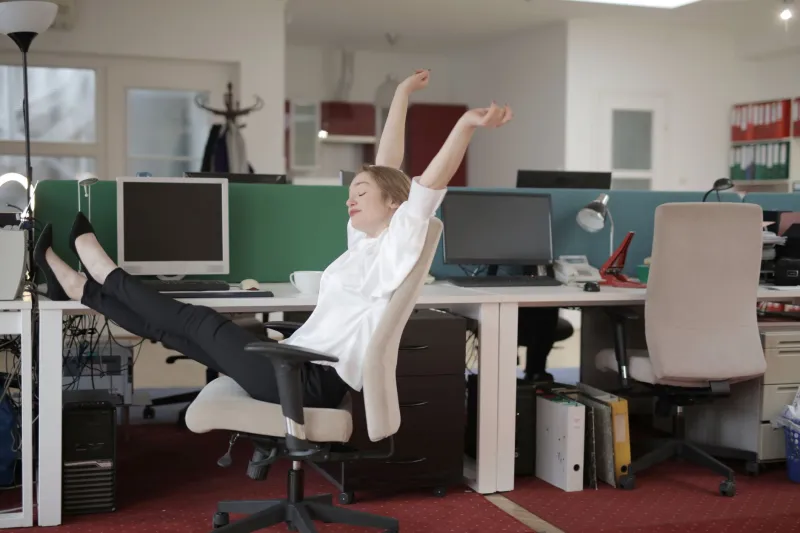
Why Sleep Is the Workout You're Not Doing (And It's Costing You Gains)

Let's be honest — there's a certain badge of honor that comes with the early-morning grind. The 4:45 a.m. alarm, the dark parking lot at the gym, the Instagram post that says "while you were sleeping." Hustle culture has convinced a lot of us that rest is for the weak and that more effort always equals better results.
But here's the thing: your body doesn't build muscle during a workout. It builds muscle while you sleep. And if you're consistently cutting your sleep short to chase those extra reps, you're essentially taking one step forward and two steps back every single night.
At Live Healthy Wellness Centre, we talk a lot about moving better and eating smarter — but living fuller? That third piece of the puzzle is where sleep lives, and it's the one most active people quietly ignore.
What Actually Happens to Your Body While You Sleep
Sleep isn't a passive state. It's an incredibly active process where your body runs through a series of biological repair jobs that simply cannot happen any other way.
During deep sleep — specifically slow-wave sleep — your pituitary gland releases human growth hormone (HGH). This hormone is responsible for tissue repair, muscle synthesis, and fat metabolism. No deep sleep, no HGH surge. It's that simple.
Your muscles also rely on sleep to replenish glycogen stores, which are the primary fuel source for high-intensity exercise. Skimping on rest means you're showing up to your next workout already running low on gas. You'll feel it in your performance even if you can't quite pinpoint why.
And then there's inflammation. Intense training creates micro-tears in muscle fibers — that's how muscles grow stronger. But the inflammatory response that follows needs time and sleep to resolve properly. Chronic sleep deprivation keeps that inflammation elevated, which doesn't just slow recovery. Over time, it contributes to overuse injuries, joint pain, and immune system suppression.
The 5 a.m. Trap
Here's where a lot of well-meaning fitness enthusiasts go sideways. The logic sounds reasonable: "I'm busy, so I'll just wake up earlier to fit in my workout." But if waking up at 5 a.m. means you're only getting five or six hours of sleep, the math doesn't work in your favor.
Research from the American Academy of Sleep Medicine consistently shows that adults need between seven and nine hours of sleep per night for optimal health. Athletes and people in heavy training phases often need even more — closer to nine or ten hours.
Cutting sleep to work out harder is a bit like maxing out your credit card to invest in stocks. The strategy has a certain logic to it, but the debt accumulates fast.
A few signs that your sleep deficit is catching up with your training:
- Plateaued progress despite consistent effort
- Persistent muscle soreness that doesn't resolve between sessions
- Mood swings and irritability (cortisol, the stress hormone, spikes with sleep loss)
- Increased cravings for sugar and high-calorie foods
- Getting sick more often than usual
If any of these sound familiar, your body might be sending you a message.
Sleep Quality vs. Sleep Quantity: You Need Both
It's not just about clocking hours. You can spend eight hours in bed and still wake up exhausted if your sleep quality is poor. Fragmented sleep — waking up frequently, lying awake for long stretches, or spending too much time in light sleep stages — won't give your body the deep recovery it needs.
A few common culprits that tank sleep quality for active people:
Late-night workouts. Exercise raises core body temperature and triggers an adrenaline response. Both of these work against falling asleep quickly. If evening training is your only option, try to finish at least two hours before bed and wind down with some light stretching or breathing work.
Alcohol. A post-workout beer might feel relaxing, but alcohol is well-documented to suppress REM sleep — one of the most restorative sleep stages. You might fall asleep faster, but the quality drops significantly.
Screen exposure. Blue light from phones and laptops suppresses melatonin production. Even 30 minutes of scrolling before bed can delay sleep onset and reduce overall sleep depth.
Inconsistent sleep schedules. Your circadian rhythm thrives on regularity. Going to bed at 10 p.m. during the week and 2 a.m. on weekends throws your internal clock into chaos, similar to giving yourself weekly jet lag.
Practical Ways to Make Sleep Part of Your Training Plan
Think of sleep hygiene the same way you think about your workout programming — it requires intention and consistency.
Set a non-negotiable sleep window. Pick a bedtime that allows for at least seven to eight hours before your alarm, and protect it like you'd protect a gym appointment. If that means shifting your morning workout to lunchtime or the evening, experiment with it.
Build a wind-down routine. Your nervous system needs a transition signal between "go mode" and rest. Try 15 to 20 minutes of light activity before bed — gentle yoga, reading a physical book, or a warm shower. The drop in body temperature after a warm shower actually promotes sleepiness.
Optimize your sleep environment. Keep your bedroom cool (around 65–68°F is ideal for most people), dark, and quiet. Blackout curtains and a white noise machine are inexpensive investments that pay serious dividends.
Track your recovery, not just your output. Wearables like the WHOOP, Garmin, or even the Apple Watch give you data on sleep stages and recovery scores. Use that information to make smarter decisions about training intensity on any given day.
Prioritize sleep during heavy training blocks. If you're training for a marathon, a powerlifting meet, or just going through a particularly demanding phase at work, this is exactly when sleep should go up, not down.
Reframing Rest as Performance
The cultural shift we need isn't complicated, but it does require letting go of the idea that rest is laziness. Elite athletes — the ones performing at the highest levels — are almost universally deliberate about their sleep. LeBron James famously sleeps up to 12 hours a night during the NBA season. Roger Federer has spoken openly about prioritizing ten to twelve hours during training periods.
These aren't people who lack drive. They understand that recovery is where performance is built.
Moving better starts with giving your body the time it needs to repair. Eating smarter fuels the process. But living fuller? That requires showing up rested, clear-headed, and ready — and that only happens when sleep is treated as the non-negotiable it truly is.
Your alarm clock will still be there tomorrow. Give your body tonight.