Flexibility Isn't Mobility — And Confusing the Two Is Keeping You Stiff
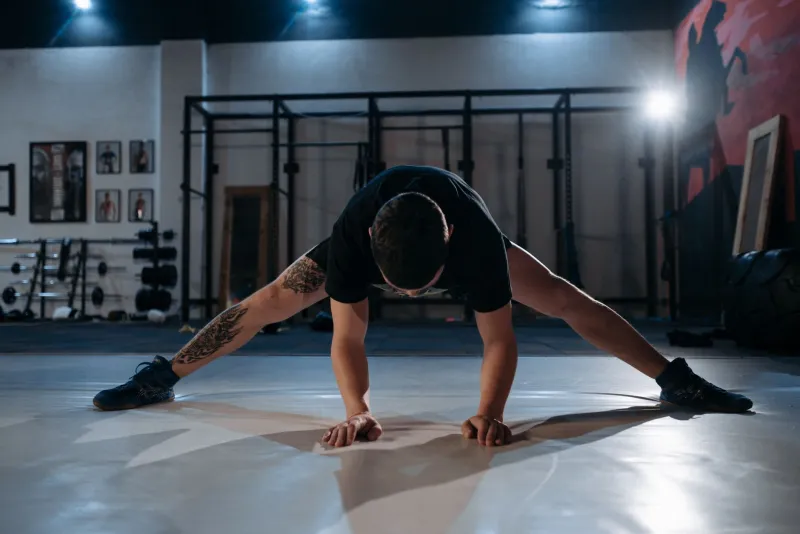
You're Probably Stretching — But Are You Actually Moving Better?
Here's a scenario a lot of us know well. You roll out of bed, spend ten minutes doing the same hamstring stretches you've done since high school gym class, and then wonder why your hips still lock up during a squat or your lower back complains after a run. Sound familiar?
The problem isn't your commitment to stretching. The problem is that stretching and mobility are two completely different things — and most active people are investing time and energy into one while desperately needing the other.
Let's clear this up for good.
The Flexibility vs. Mobility Divide
Flexibility is a passive quality. It refers to how far a muscle can lengthen when an external force — gravity, your hands, a strap — is applied. Think of a classic seated forward fold. You're not really doing much there; you're just letting gravity tug on your hamstrings.
Mobility, on the other hand, is active. It's your body's ability to move a joint through its full range of motion under its own muscular control. Mobility requires strength, coordination, and neuromuscular awareness. A person can be impressively flexible on a yoga mat and still move like a rusted hinge in the gym. That's because passive flexibility doesn't automatically translate into functional movement.
This distinction matters enormously for anyone trying to move better — whether you're a weekend trail runner in Colorado, a CrossFit regular in Austin, or someone just trying to get through a workday without your neck seizing up.
Why Static Stretching Has a Limited Role
Static stretching — holding a position for 20 to 60 seconds — has its place. Post-workout, when your muscles are warm, it can help maintain tissue length and signal your nervous system to dial down tension. But as a primary tool for improving how you move? Its track record is pretty underwhelming.
Research consistently shows that static stretching before activity can actually reduce power output and reaction time temporarily. More importantly, it doesn't teach your body how to use the range of motion you're trying to access. You can stretch your hip flexors every single day and still fire them poorly during a lunge because your glutes aren't doing their job on the other side.
Stretching addresses the muscle. Mobility work addresses the system.
Dynamic Mobility Work: The Missing Piece
Dynamic mobility drills are the real game-changer for most active people. Unlike static holds, dynamic work moves your joints through their range of motion with intention and muscular engagement. Think leg swings, hip 90/90 transitions, thoracic spine rotations, and controlled articular rotations (CARs).
What makes these drills effective is that they simultaneously build strength at end ranges — the positions where most injuries happen. Your nervous system is inherently protective. If it doesn't trust your ability to control a joint at full extension or deep flexion, it simply won't let you get there without a fight. Dynamic mobility work teaches your nervous system that those positions are safe, which is why people often see immediate range-of-motion improvements after just a few sessions.
A solid dynamic warm-up routine before training does double duty: it preps your body for movement and progressively builds the kind of functional range of motion that actually carries over into your squats, deadlifts, and daily life.
Don't Overlook the Fascia
There's another layer to this conversation that often gets skipped: your fascia. Fascia is the connective tissue web that surrounds and interconnects every muscle, bone, and organ in your body. When it's healthy and hydrated, it glides freely. When it's dehydrated, overworked, or recovering from injury, it can become dense and restrictive — and no amount of static stretching will fully address that.
This is where tools like foam rollers, lacrosse balls, and manual therapy techniques come in. Fascial release work — sometimes called self-myofascial release — helps restore tissue quality by applying sustained pressure to areas of restriction. It's not a magic bullet, but used strategically before mobility work, it can help your joints access ranges they've been locked out of.
Think of it this way: fascial release prepares the tissue, dynamic mobility trains the movement, and strength work reinforces the new range. That three-step sequence is far more effective than 30 minutes of passive stretching alone.
A Simple Framework for Assessing Your Own Movement
Before you can fix your range of motion, you need to know where you're actually limited. Here's a starting point:
Test your hip mobility. Can you perform a deep squat with your heels flat on the floor and your torso upright? If your heels lift or your lower back rounds aggressively, your ankle dorsiflexion or hip mobility — or both — are likely the limiting factor.
Check your thoracic spine. Sit in a chair and try to rotate your upper body left and right. If one side feels dramatically stiffer, your thoracic mobility is restricting you — which has downstream effects on your shoulders, neck, and even hips.
Assess your shoulder overhead position. Stand with your back flat against a wall and try to raise both arms overhead without your lower back arching away from the wall. If you can't do it, you've got shoulder and/or thoracic work to do.
These aren't diagnostic tools — if you're dealing with chronic pain or injury, always work with a qualified physical therapist or movement specialist. But for general self-awareness, they give you a useful starting point.
Building a Smarter Movement Practice
You don't need to overhaul your entire routine overnight. Start by replacing your static pre-workout stretch session with 8 to 10 minutes of targeted dynamic mobility work. Focus on the areas your self-assessment flagged. Add 5 minutes of foam rolling or targeted fascial release beforehand if you have the time.
Post-workout is still a great time for static stretching — just keep it in its lane. Use it to decompress, not to build mobility.
Over time, the payoff is real: less stiffness, better lifting mechanics, fewer nagging injuries, and movement that actually feels good. That's not just fitness — that's living fuller in your body every single day.